

What is Customer Self Serve?
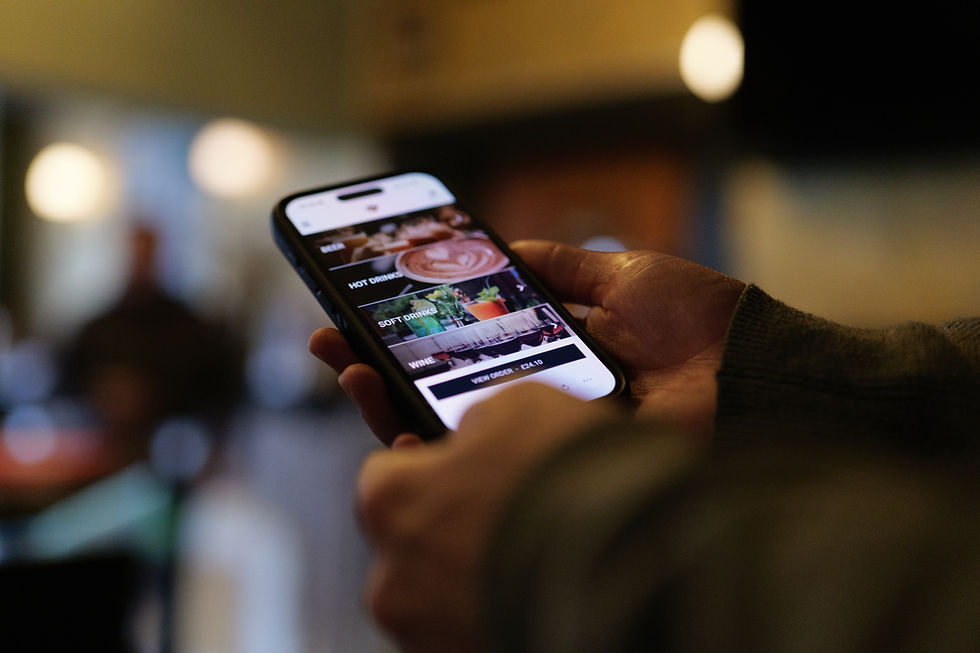
Customer self-serve gives your customers an easier way to order and pay, whether they are in the venue or ordering from elsewhere. With ByTable, guests can scan a QR code and order straight from their table. With TouchTakeaway, they can place click & collect or delivery orders through your web or app.
The result is a smoother customer journey, fewer order errors, and less pressure on your team. Better still, your own-channel orders are commission-free, so you keep the sale and the customer data, with only card processing fees still applying.
What’s At Stake If You Don’t Act
-
Third-party marketplaces can take 20–30% per order.
-
Long waits mean abandoned orders and lower satisfaction.
-
Staff shortages and rising wages leave gaps on the counter.
-
Many guests now expect a quick, digital way to order and pay.

How much does mobile order & pay cost?
We’ll help you choose the right setup and show clear examples.
-
In-venue QR/table ordering (ByTable).
-
Web/app for click & collect or delivery (TouchTakeaway).
-
Commission-free on your own orders, you keep the sale and the data (card processing fees still apply).
-
Typical costs include software, branding, optional hardware, and payment processing.
Recommended setups by venue type
Order & pay at the table.
Fewer queues at the bar.
Let guests order rounds from their phones; your team focuses on service, not card machines.
Skip the queue. Collect when it’s ready.
Guests order ahead or from the table; you smooth the rush and keep seats turning.
Order fast. Pick up faster.
Cut counter queues and keep kitchens flowing with click & collect and timed slots.
Give guests control -without losing the personal touch.
Order-at-table for speed; staff focus on hosting, recommendations and service.
Order from the room, bar or poolside.
Guests order and pay in their own time; your team delivers and checks in.
Beat the interval rush.
Guests order to seat or collection points; operations keep pace with peaks.
Which mobile ordering route is right for you?
ICRTouch
(ByTable & TouchTakeaway)
Best for: pubs, cafés, QSR and casual dining wanting a hospitality-first setup.
Strengths: commission-free on your own orders, tight integration with EPOS, kitchen and loyalty, in-venue + online in one stack
Watch-outs: upfront licensing/branding work, transparent and predictable once live.
Independent ordering platforms
(e.g. Flipdish)
Best for: takeaways/QSRs wanting branded apps and web ordering.
Strengths: polished guest apps and marketing tools.
Watch-outs: you’ll still need a full EPOS or robust integration, less suited to full-service dining.
Cloud EPOS with ordering add-ons
(e.g. Lightspeed, Epos Now)
Best for: venues already on these platforms wanting a simple add-on.
Strengths: quick to deploy, uses your existing menu and reporting.
Watch-outs: costs rise as you stack features, check what’s included vs add-on, and the total monthly.
Marketplaces
(Uber Eats, Deliveroo, Just Eat)
Best for:
reach beyond your own audience.
Strengths:
large customer base; discovery.
Watch-outs: high commissions and less control of brand/data, best used alongside your own channel, not instead of it.
Bottom line: If you want control, transparency and a hospitality-first design, ByTable & TouchTakeaway are among the strongest options. Marketplaces can add volume, but protect your margin with your own channel.

Why Choose Truli?
-
We’ll help you decide if you even need mobile ordering.
-
If it isn’t right for your venue, we’ll say so.
-
Nationwide installation, training and integration by in-house engineers.
How It Works
Book a Free Consultation
Get honest advice tailored
to your venue.
Decide with confidence -
even if the best answer isn’t us.